DTF printing in one paragraph
DTF (direct-to-film) printing is a transfer process that prints full-color CMYK plus white ink onto a clear film, cures a hot-melt adhesive powder to the back of the print, then heat-presses the transfer onto the garment. It produces photo-real, unlimited-color art on cotton, polyester, and blends with no per-color setup fee and no minimum order. At Lucky Clover Threads, every DTF order is printed, pressed, and quality-checked and ships within 48 hours of artwork approval.
What DTF printing actually is
Direct-to-film (DTF) printing is a four-stage transfer process. A purpose-built printer lays down a color image in CMYK ink on a clear PET film, then prints a layer of white ink underneath the color so the art reads correctly on dark garments. A hot-melt adhesive powder is shaken onto the wet white ink, and a curing oven melts that powder into a flexible bonding layer. The finished transfer, color art with a soft adhesive backing, gets aligned on the garment and heat-pressed at production temperature and pressure. A cool-peel release leaves the print bonded into the fibers with a thin, soft hand.
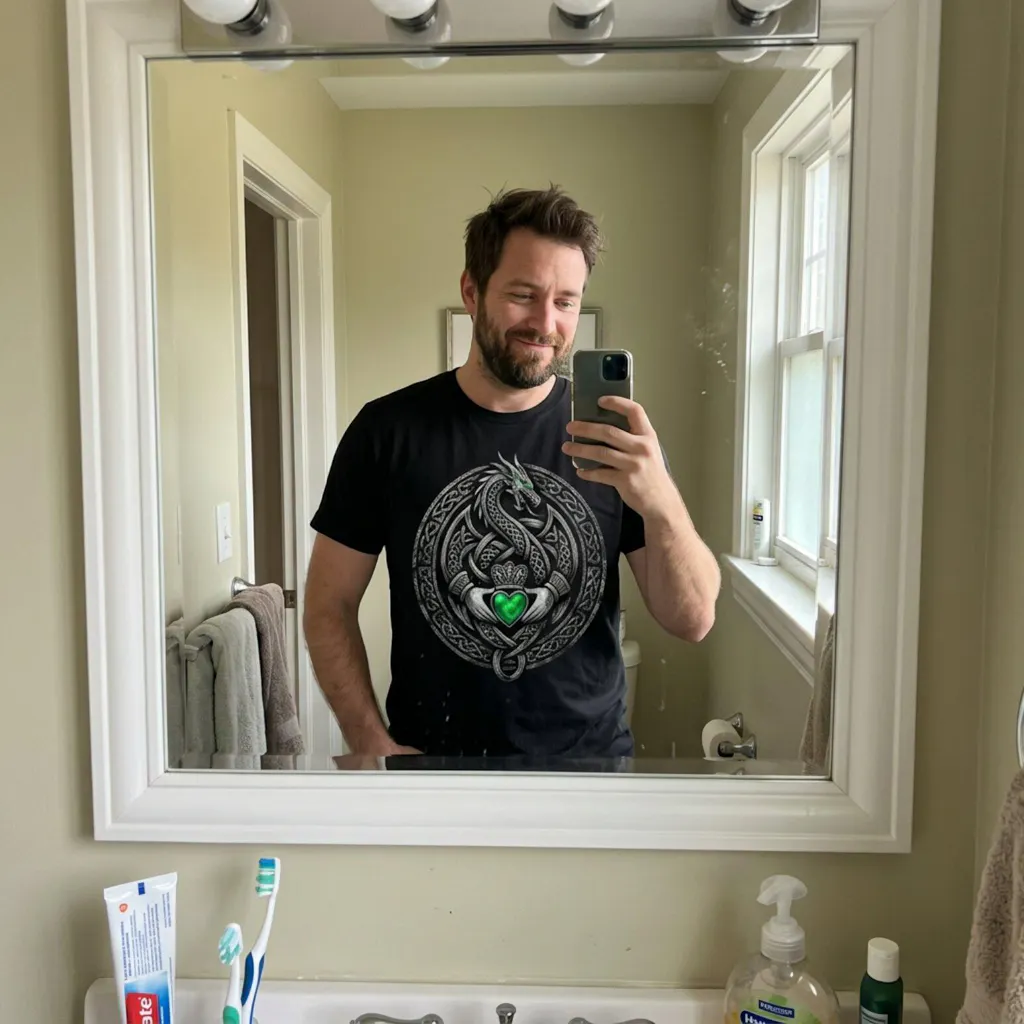
What DTF can do that other methods cannot: photo-real imagery, unlimited colors, gradients, soft fades, halftones, and dense detail without any per-color screen setup. The same press, same film, same powder handles a one-color logo or a 12-color illustration. There is no cost penalty for color complexity. It works on cotton, polyester, tri-blends, fleece, performance knits, canvas, and most synthetics without a substrate change. And because each transfer is printed on demand, a 50-piece order with 50 different names on the back is operationally identical to 50 of the same shirt.
What DTF is not: it is not screen printing (no thick plastisol hand, no ultra-large prints), it is not embroidery (no dimensional thread, no premium polo signal), and it is not vinyl (no glossy plotter-cut look). It is also not the right call for athletic moisture-wicking polyester at high heat tolerance, oversized 14"+ all-over prints, or programs where the customer specifically wants the look of stitched thread. When DTF is wrong, we will say so and route the project to embroidery or screen-print outsource.
When DTF is the right choice
Here are the five buying scenarios where it consistently wins on price, timeline, or print quality versus the alternatives.
Full-color logos with gradients or fades
Anything that crosses 3-4 flat colors is a screen-printing surcharge waiting to happen. Each additional color is a separate screen, separate setup fee, separate registration step. DTF prints the entire color spectrum from a single film transfer at the same per-piece price. Brand gradients, multi-color icon systems, photographic textures, and ombre fades land cleanly without any 'simplify the art' conversation. If your brand color palette is more than three Pantone references, DTF is almost always the right answer.
Photo-real art and dense illustrations
DTF reproduces continuous-tone imagery, including photographs, painted illustrations, complex character art, and halftone shading, at full color resolution. A photograph on a t-shirt that would require four-color process screen printing (and a four-figure setup) prints from DTF as a single transfer at the same price as a one-color logo. The trade-off is print size: photographic detail reads best at chest-sized or back-sized prints in the 8-12 inch range, not at full-front oversize.
Small-batch runs from 1 to 50 pieces
Screen printing penalizes small runs hard: a $40 screen fee per color amortized across 12 shirts is $13 per shirt before the ink even touches fabric. DTF has zero setup. The first piece costs the same per-unit as the fiftieth, which makes it the only honest answer for sample runs, one-off gifts, prototype tees, single-piece personalization, and any program where you do not know the final quantity yet. Order one, see how the team likes it, order forty more.
Mixed-garment orders with a shared logo
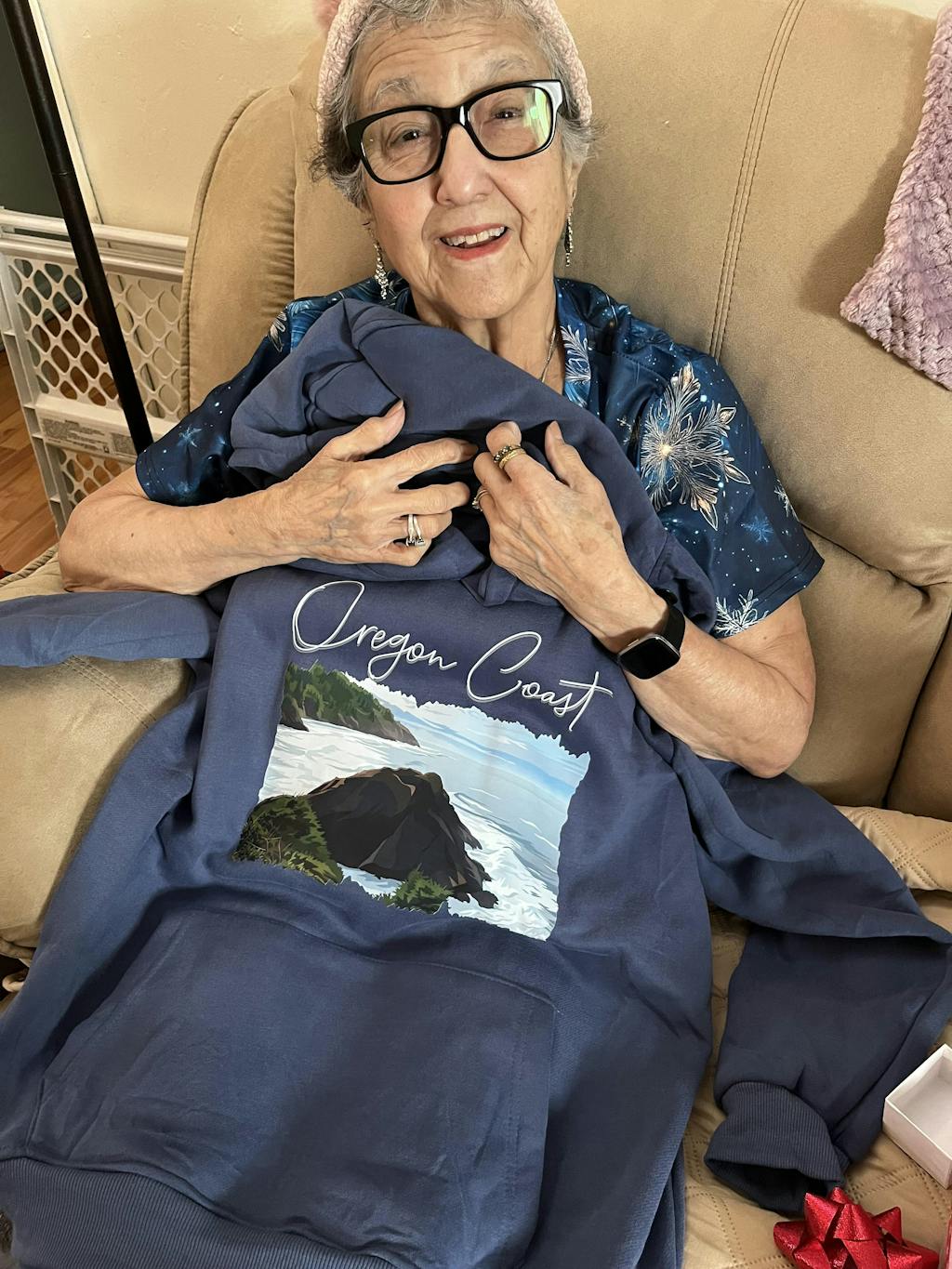
One project: tees for the warehouse, hoodies for the office, tote bags for the open house, and a few youth tees for the owner's kids. Screen printing would re-setup each substrate; embroidery would re-hoop each garment. DTF runs the same transfer across all of them with no operational distinction: same film, same press, same per-piece price. If your project includes more than one garment style and you want them to match, DTF is the path of least resistance.
Multi-color art that would burn screen fees
The classic break-even math: at 6 colors, the screen-print setup is roughly $240 before printing starts. For a 24-piece run, that is $10 per shirt in setup alone. DTF eliminates the entire setup line item. Anything in the 4-12 color range, for runs under about 75 pieces, is decisively cheaper on DTF after you do the actual math. Past that quantity threshold screen printing pulls ahead, and we will say so when it does.
Caring for your DTF print
- Wait 24 hours before the first wash.
- Turn the garment inside out and wash in cold water.
- Use mild detergent and skip the bleach and fabric softener.
- Tumble dry low or hang dry.
- Don't iron directly on the print.
Questions?
Have a design in mind or want to know if DTF is right for your project? Contact us and we'll be happy to help!